Date: April 3, 2025
Author: Pankaj Kumar
As U.S. markets continue to tumble and headlines scream of a potential global trade war, many are asking: Why is this happening now? And is there a deeper strategy behind it?
Recently, President Trump introduced sweeping reciprocal tariffs — a bold move that slaps a 10% universal duty on all imports, with higher targeted tariffs on specific regions like China (34%), EU (20%), and Japan (24%). The administration claims this could generate nearly $700 billion per year and address long-standing trade imbalances.
But if the U.S. economy is expected to benefit in the long term, why is the stock market reacting so negatively?
📊 Why the Market Is Falling Despite Bold Promises
While the White House sees the tariff move as economic realignment, Wall Street sees danger. The market has dropped sharply — with the Dow losing over 1,400 points, the S&P 500 falling 4%, and the Nasdaq tumbling over 5% in recent days.
Why the panic?
- 🔻 Fear of a Global Trade War: Other nations may retaliate, escalating tensions and hurting international trade.
- 🚫 Disrupted Supply Chains: Companies like Apple, which heavily rely on Chinese production, face massive cost increases.
- 💰 Inflation Worries: Higher tariffs = higher costs = rising prices for consumers.
- 😬 Recession Risk: Uncertainty and reduced corporate margins could drag down economic growth.
🤔 So Why Is the U.S. Government Pushing This Hard?
It’s a fair question — and many experts argue a more gradual approach to imposing tariffs would’ve minimized economic shocks. But Trump’s aggressive rollout suggests he may have a bigger agenda in play.
🔍 Potential Strategic Goals Behind the Tariff War:
- 🇺🇸 Bring Manufacturing Back to the U.S.
Tariffs could push companies to return production to American soil — part of the long-term “America First” vision. - 💼 Force Better Trade Deals
Trump’s history shows he prefers to pressure first, negotiate later. This could be a play to bring nations back to the table. - 🧯 National Security & Economic Independence
Especially with China, the goal may be to reduce U.S. dependence on foreign critical materials and tech. - 🗳️ Election-Year Strategy
Tariff headlines play well with his voter base. It’s a way to show strength and decisiveness leading into 2024-25 campaigns. - 🌎 Resetting Global Trade Norms
Trump has long been critical of institutions like the WTO. These moves could be part of his push to rewrite the rulebook.
💸 But What About Inflation? How Will He Justify It?
Tariffs inevitably drive prices higher. So, how might the administration explain this to everyday Americans?
- 🧱 “Short-Term Pain for Long-Term Gain”
Trump may frame inflation as a patriotic sacrifice to regain economic sovereignty. - 🌍 Blame Foreign Actors
Accusing China, the EU, or other trade partners of unfair practices could deflect domestic blame. - 📉 Push for Rate Cuts
Rising inflation may be used as leverage to pressure the Federal Reserve into cutting interest rates.
Still, this is a risky game. If inflation sticks and recession fears grow, it could politically backfire — especially if Americans feel the pain in their wallets without seeing immediate benefits.
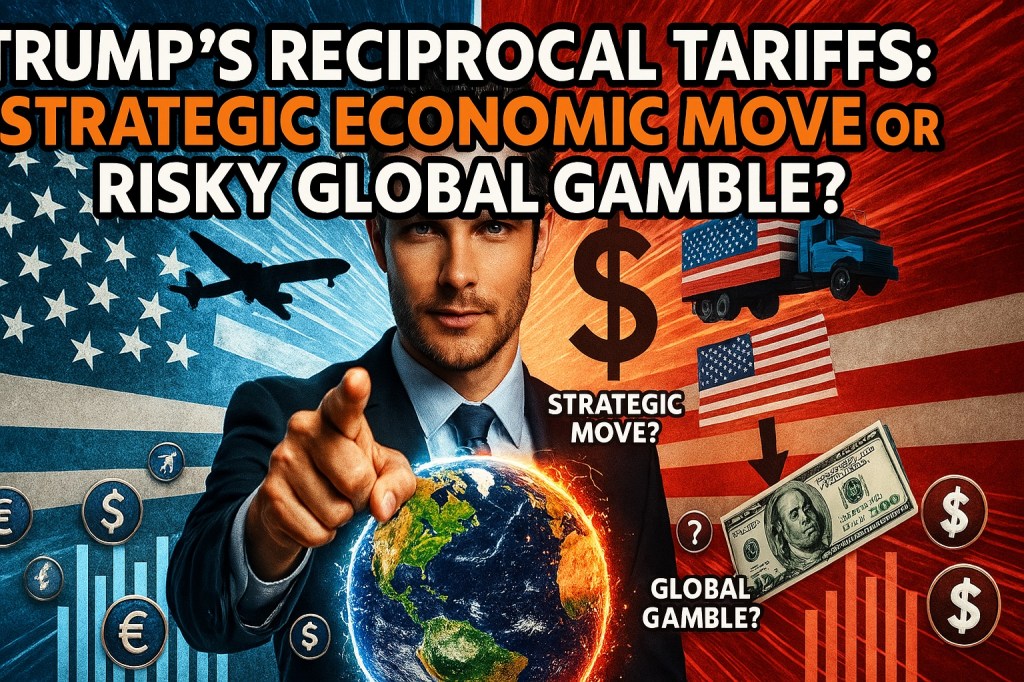
🧠 Final Thoughts: Smart Strategy or Dangerous Gamble?
Whether you agree or not with Trump’s aggressive tariff policy, there’s no doubt it marks a pivotal moment in U.S. trade history.
From a geopolitical lens, this may be a calculated effort to restructure the global economic system — but it comes with short-term volatility and real risks.
If inflation spirals or trade wars escalate, it may become a tough sell to voters and investors alike.
The big question is: Will this bold strategy lead to renewed economic dominance — or a costly lesson in overreach?
Time will tell.
💬 Have thoughts on this? Drop your comments below.
📣 Share this with friends or forums who are confused about what’s happening.
Disclaimer: Not Financial Advice, Only for Research Purposes And May Sometimes Be Inaccurate. Paypal Donations (anything helps)


