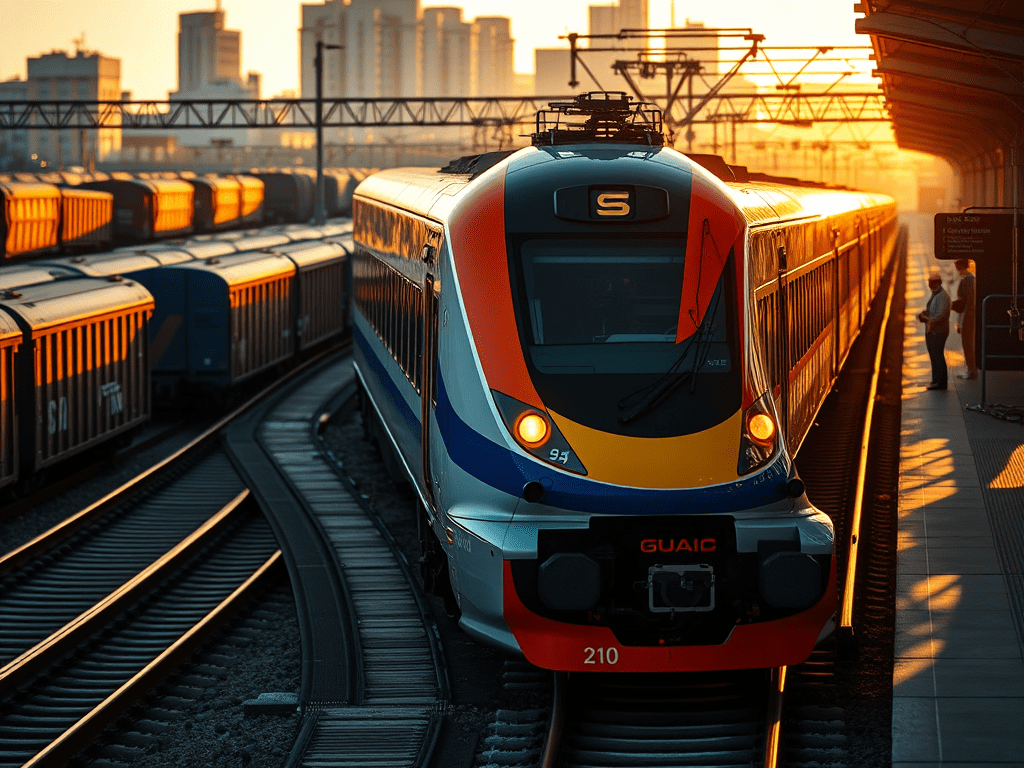
Intro paragraph
Titagarh Rail Systems reported a mixed Q3 FY26 update, with passenger systems showing strong execution and freight volumes hit by wheel-set supply issues. Management expects wheel-set production to normalize soon and sees passenger business gaining share over the next few quarters.
Key Highlights
- Passenger rail revenue rose from about INR40 crore to around INR160 crore year-on-year in the quarter; passenger EBITDA improved from under INR5 crore to about INR22 crore.
- Freight rail revenue moderated from ~INR800 crore to ~INR600 crore due to wheel-set availability and type mismatch in the industry.
- Trial production for a wheel-set joint venture expected by March; internal availability targeted in a couple of quarters, with interim imports to partially plug gaps.
- First Ahmedabad Metro rake flagged off; series production for Ahmedabad Metro has started.
- Wagon leasing license awarded — opens leasing and maintenance opportunities.
- Demerger of shipbuilding completed; coastal research vessel order announced.
- Agreement with ABB for transfer of TCMS technology expanded to include 25 kVA (in addition to 750 kVA); propulsion order book close to INR500 crore.
- Aluminium metro car body line being set up; expected completion by Q2 FY27 to enable full in-house aluminium coach production.
Financial Summary
| Metric | Current | Previous | Change | Trend |
|---|---|---|---|---|
| Passenger revenue (Q3) | ~INR160 crore | ~INR40 crore | Up sharply | Positive |
| Passenger EBITDA (Q3) | ~INR22 crore | < INR5 crore | Up markedly | Positive |
| Freight revenue (Q3) | ~INR600-odd crore | ~INR800 crore | Down | Recovering |
| Metro cars produced (Q3) | 18 cars | 3 cars | Up | Scaling up |
| 9 months metro cars | 39 cars | N/A | N/A | Improving |
| Propulsion order book | ~INR500 crore | N/A | N/A | Positive |
| Wagon leasing license | Obtained | N/A | N/A | Positive |
Business Performance
Titagarh runs two core divisions: Freight Rail Systems and Passenger Rail Systems. Freight volumes were affected by industry-wide wheel-set shortages and a mismatch between 840 mm and 1,000 mm wheel requirements, which cut production versus last year. Management has begun importing wheel sets to bridge shortfalls and expects trial production from a wheel-set JV by March, with full internal supply phased in over the next few quarters.
Passenger operations delivered a clear improvement. The company produced 18 metro cars in Q3 (versus 3 in the prior-year quarter) and 39 cars in the first nine months. Ahmedabad Metro series production is underway and the first rake was flagged off. Vande Bharat car-body production has begun, and Bangalore and Gujarat projects are progressing; Mumbai execution is expected to start later. The passenger order book represents more than three-quarters of total orders, supporting the revenue ramp.
On the technology front, Titagarh expanded its agreement with ABB for TCMS transfer of technology, now covering both 750 kVA and 25 kVA systems. The group already produces traction motors and expects traction converters and related items to flow into revenue from FY27 as propulsion orders execute. The aluminium metro car production line is being set up to enable end-to-end coach manufacturing, targeted for completion by Q2 FY27.
Separately, the shipbuilding unit has been demerged and the company has announced a coastal research vessel order. The wagon leasing license opens a new service and asset-management revenue stream, including potential maintenance contracts.
Management Commentary
Management struck a cautiously optimistic tone. They acknowledged the current seesaw in wheel-set supply that hit freight production but outlined concrete steps: interim imports, JV trial production by March, and internal supply coming in subsequent quarters. The team highlighted passenger growth as strategic — aiming for the passenger franchise to become the dominant revenue source within a year or two, supported by ongoing orders and new manufacturing capabilities. Leadership also emphasized vertical integration through technology transfers with ABB and the aluminium line to control critical components and reduce reliance on imports. The wagon leasing license and shipbuilding demerger were described as diversification moves that create new revenue and service opportunities.
Positives
- Strong quarter-on-quarter execution in passenger systems with notable revenue and EBITDA improvement.
- Technology tie-up with ABB expands in-house capabilities for metro TCMS and traction equipment.
- Aluminium coach line will enable full in-house metro coach manufacturing and support future high-speed needs.
- Wagon leasing license and shipbuilding demerger add new business avenues and recurring revenue potential.
- Propulsion order book (~INR500 crore) offers medium-term revenue visibility.
Risks
- Wheel-set supply mismatch and industry production variability can disrupt freight output and near-term revenue.
- Execution risk on new manufacturing lines (aluminium line, propulsion ramp) could delay expected benefits.
- Integration challenges from new ventures, technology transfers and leasing operations may require time and investment to scale.
- Order concentration towards passenger systems means execution shortfalls could have an outsized impact on near-term results.
Conclusion
Q3 FY26 was a turning point in parts for Titagarh: passenger operations are scaling up and contributing healthy margins, while freight work remains cyclical and constrained by wheel-set availability. Management has laid out a clear plan to fix supply issues, expand in-house capabilities and diversify through leasing and shipbuilding. For investors, the stock looks tied to two key drivers — successful normalization of wheel-set supply for freight, and continued scaling of passenger execution and manufacturing integration. Execution over the next two quarters will be important to confirm the optimistic outlook.
Disclaimer
This post is for educational purposes only and is not investment advice.

 Indian Stock Results