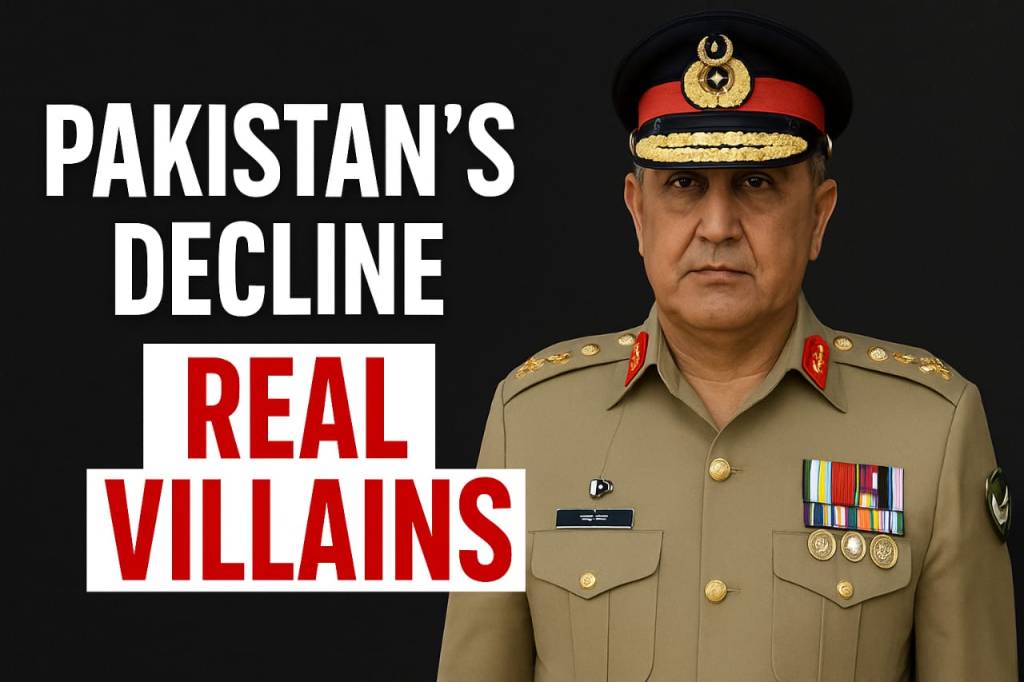
Pakistan today grapples with a multitude of crises — economic instability, water shortages, provincial disparities, terrorism, and diplomatic isolation. While some narratives blame external factors, the true causes lie deep within Pakistan’s own power structures: its military establishment, ISI, and Punjab-centric elite.
Who Are the Real Villains Behind Pakistan’s Internal Suffering?

This infographic exposes the different layers contributing to Pakistan’s internal decline — from Punjab’s domination of resources to the military’s exploitation of the state.
Punjab Province: The Economic Stronghold Exploiting Others
Punjab Province has historically dominated Pakistan politically and economically. It commands a disproportionate share of national resources, often depriving provinces like Sindh, Balochistan, and Khyber Pakhtunkhwa. Marginalized voices from these regions are frequently silenced by the central authorities rooted in Punjab.
- Controls federal politics and civil bureaucracy
- Enjoys an unequal share of economic resources
- Fuels resentment and divisions among provinces
Pakistani Military and ISI: Agents of Exploitation and Conflict
The military establishment and its intelligence arm, the ISI, have evolved into entities serving their self-interest rather than the nation. They:
- Support and shield terrorist groups for strategic leverage
- Control and misuse national assets for personal enrichment
- Undermine regional peace to maintain power and secure external funding
The military has amassed enormous wealth through business empires, while the ordinary citizen continues to face poverty and hardship.
Case Study: Indus Waters Treaty Suspension and Its True Victims
India’s recent move to suspend parts of the Indus Waters Treaty has intensified debates. But who stands to lose the most?
- Sindh Province, already battling severe water scarcity, faces the greatest impact.
- However, the true culprit is not India. It is the Punjab-dominated establishment, whose reckless aggression and poor governance have led to such dire consequences.
Had Pakistan’s rulers pursued peace and development over hostility and extremism, these setbacks could have been prevented.
Conclusion: The Internal Enemy
The gravest threat to Pakistan does not come from outside — it stems from within, from its own military, ISI, and Punjab-elite power structures.
Until Pakistan confronts and reforms its internal failures, suffering and decline will continue, no matter whom they blame externally.

 Indian Stock Results