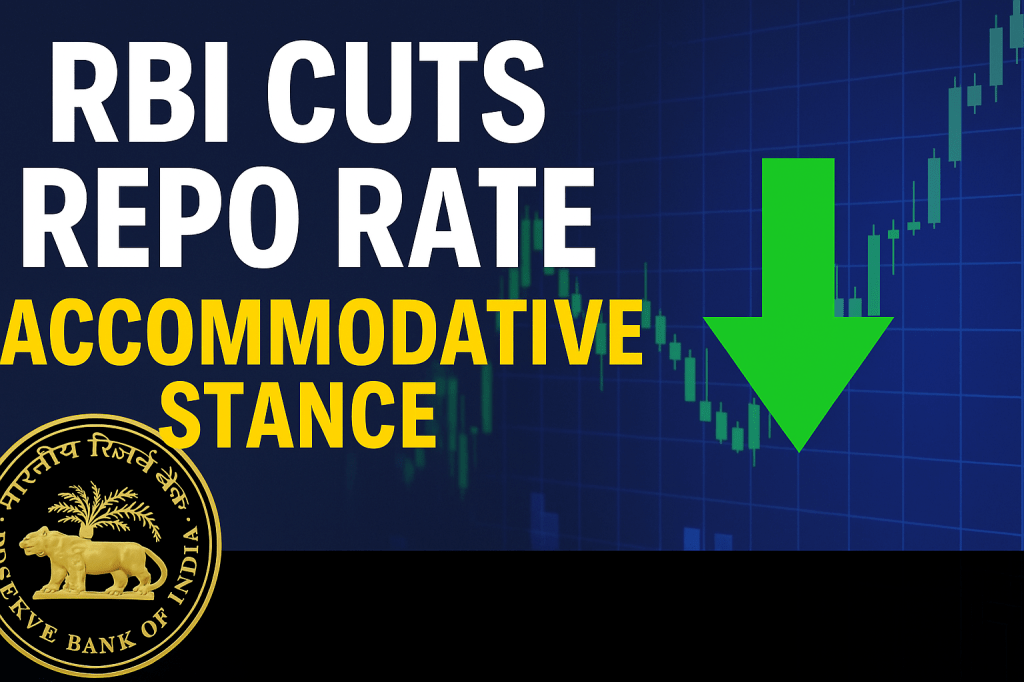
Meta Description: The Reserve Bank of India (RBI) slashed the repo rate to 6.00% and adopted an accommodative policy stance. Read how this decision affects the Indian economy and stock markets.
Introduction
On April 9, 2025, the Reserve Bank of India (RBI) announced its latest monetary policy decision, setting the stage for how the Indian economy may evolve in the coming months. In a bid to counter global economic pressures and spur domestic growth, the central bank has made a notable shift in its policy direction.
Key Highlights from the RBI Policy Announcement
1. Repo Rate Cut to 6.00%
The RBI reduced the repo rate by 25 basis points, lowering it from 6.25% to 6.00%. This marks the second consecutive rate cut this year after a similar move in February 2025. The decision aims to ease borrowing costs and encourage investment and consumption.
2. Shift to Accommodative Stance
The Monetary Policy Committee (MPC) altered its stance from “neutral” to “accommodative.” This signals the RBI’s readiness to further cut rates if growth continues to face headwinds.
3. GDP Forecast Revised Downward
India’s GDP growth projection for FY2025–26 has been revised down to 6.5% from the earlier estimate of 6.7%. The RBI cited growing global uncertainties, especially the recent escalation in U.S. tariffs, as a major concern for India’s export-driven sectors.
4. Inflation Outlook Improved
The inflation forecast was slightly lowered to 4.0% (from 4.2%), thanks to a moderation in food prices and stable commodity trends.
Stock Market Reaction: Bearish Despite Stimulus
Despite RBI’s growth-supportive measures, Indian stock markets closed in the red:
- Nifty 50 slipped 0.72% to 22,372.7
- BSE Sensex dropped 0.58% to 73,791.9
Sectoral Losses:
Out of the 13 major sector indices, 12 ended lower. The IT sector saw a sharp decline of 3%, while pharma stocks dropped by 1.8%, largely due to concerns over reduced export prospects amid the U.S. tariff hikes.
What This Means for Investors and Businesses
While the RBI’s accommodative stance offers some optimism, markets are grappling with the broader impact of global trade frictions. Businesses exposed to international markets, especially in tech and pharma, may need to brace for volatility. On the flip side, domestic-focused sectors like banking, real estate, and FMCG may benefit from lower interest rates in the medium term.
Final Thoughts
The RBI’s latest policy reflects a balancing act between fostering growth and maintaining inflation within target. With the door now open for further easing, all eyes will be on global developments and their ripple effects on the Indian economy.
What’s Your Take?
Do you believe the RBI’s moves are enough to shield the economy from global turbulence? Let me know your thoughts in the comments below.
Enjoyed this post? Like, Comment & Follow my blog for more insightful content!

 Indian Stock Results