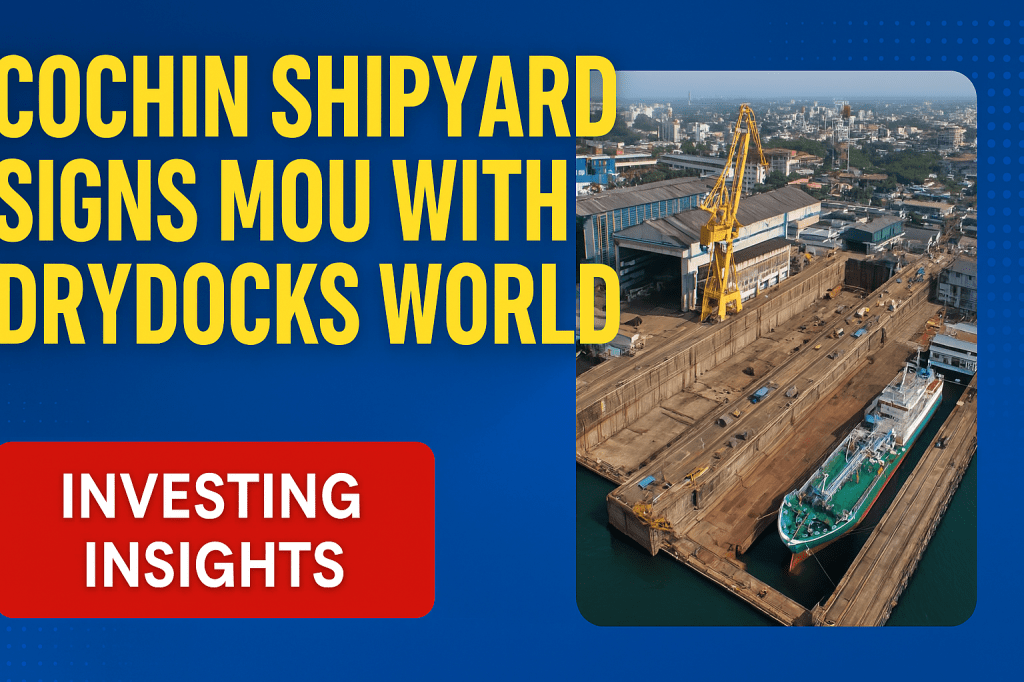
Cochin Shipyard Limited (CSL), one of India’s premier shipbuilding and repair companies, has entered into a promising strategic partnership with Drydocks World, a key subsidiary of the global logistics giant DP World. This memorandum of understanding (MoU) is more than just a symbolic handshake—it signals a collaborative effort to transform India’s maritime infrastructure, with long-term implications for the industry and investors alike.
What’s the Deal About?
Under the new MoU, CSL and Drydocks World aim to:
- Establish world-class ship repair clusters in Kochi (Kerala) and Vadinar (Gujarat).
- Collaborate on offshore fabrication projects and marine engineering ventures.
- Engage with Indian government agencies and major ports to expand operational capabilities.
This initiative is in step with national development strategies like the Maritime India Vision 2030 and the AmritKaal Maritime Roadmap, reflecting a strong policy alignment at both the domestic and international level.
Why Investors Should Care
✅ Growth Potential
The Indian coastline is a bustling marine corridor, but the country still lacks ship repair infrastructure on par with global standards. This partnership could enable CSL to tap into a growing market, providing maintenance services to both domestic and international vessels.
✅ Diversified Revenue Streams
While CSL is known for its shipbuilding capabilities, expanding into repair and offshore fabrication gives it more stable and repeat revenue channels—much like an annuity model in finance.
✅ Technology Boost
By teaming up with a global player like Drydocks World, CSL stands to benefit from advanced operational know-how, improved efficiency, and global best practices.
What Are the Risks?
- Execution Complexity: Setting up large-scale repair clusters requires significant investment and logistical planning.
- Market Competition: Other countries in Asia already have strong ship repair industries.
- Regulatory Dependencies: The progress of this initiative will rely on smooth coordination with ports, ministries, and other government bodies.
Looking Ahead: A Strategic Move Toward Self-Reliance
This MoU not only boosts Cochin Shipyard’s business prospects but also plays into India’s broader goal of becoming a self-reliant maritime powerhouse. If implemented effectively, the deal could reinforce India’s position as a key player in the global marine industry—right from construction to maintenance and beyond.
Final Thoughts
For long-term investors, this development could be a catalyst for future growth. While it’s early days, the direction is promising. Cochin Shipyard is clearly preparing for a bigger role on the international maritime stage—and that could translate into solid value in the years to come.
Stay tuned for updates as this partnership unfolds. Got thoughts or questions about Cochin Shipyard’s next move? Drop a comment below! 🚢📈
Enjoyed this post? Like, Comment & Follow my blog for more insightful content!

 Indian Stock Results